

Economic Relations Overview
Bilateral Relations Dynamics
Indonesia – South Korea
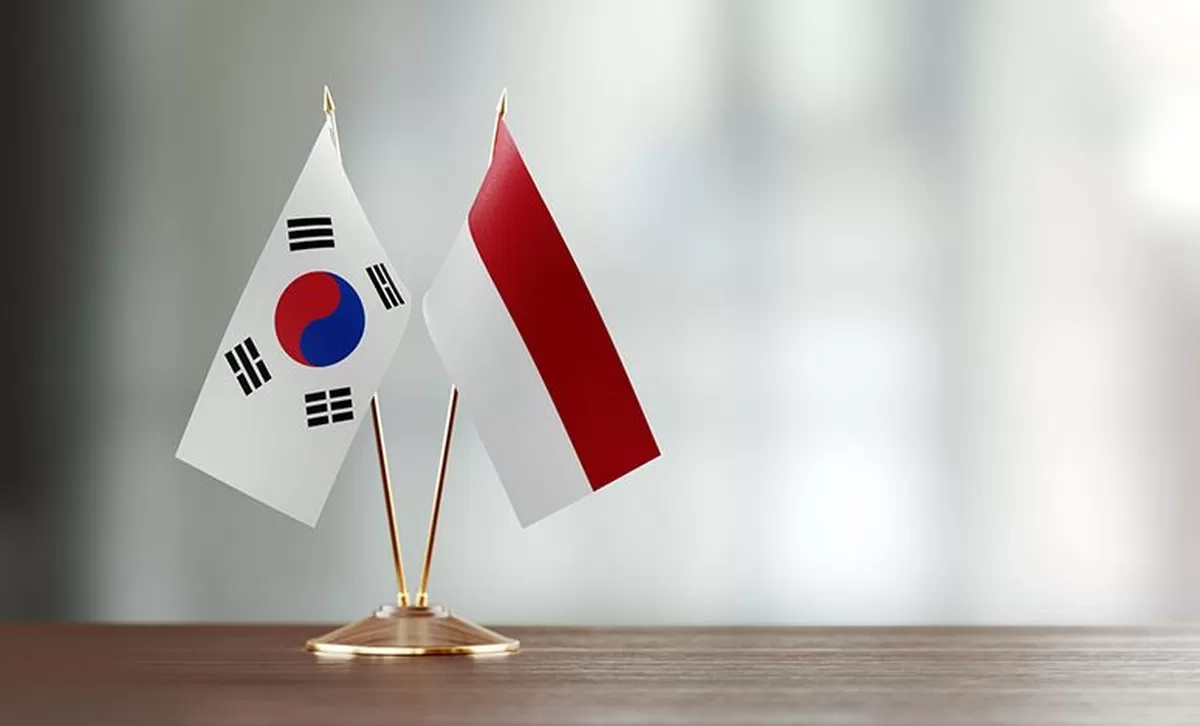
South Korea is one of Indonesia's most dynamic major trading partners. With the tightening of commitments through the full implementation of the Indonesia-Korea Comprehensive Economic Partnership Agreement (IK-CEPA), both nations have entered a new era of open, inclusive, and strategic economic cooperation.
Historically, Indonesia's exports to South Korea have been dominated by raw materials and energy commodities, such as coal, liquefied natural gas (LNG), and copper ores, which are highly needed by Korea's heavy manufacturing and power generation sectors. However, recent trends show a positive shift towards exporting value-added products, aligning with Indonesia's national industrial downstreaming vision.
Conversely, Indonesia's imports from South Korea center on products supporting domestic industrial modernization, such as mechanical machinery, plastic products, iron and steel, as well as electronic components and motor vehicles. This strong synergy is proven by South Korea's massive investment in building the electric vehicle (EV) and battery ecosystem in Indonesia, turning the country not just into a market, but a vital regional production base.
"The implementation of IK-CEPA accelerates the supply chain integration of both countries, changing the trade paradigm from mere primary energy exports to smart manufacturing collaboration and sustainable industrial ecosystems."
Indonesia Exports → South Korea
Top Export Commodities
Four major commodities dominating Indonesia's export flow to the South Korean market, playing a central role in their industrial and energy supply.
Coal
An essential energy source exported massively to maintain the stability of Korean power plants and heavy industries.
Liquefied Natural Gas
A cleaner transition fuel solution meeting the stringent emission standards of South Korea's national needs.
Copper Ores
Crucial raw materials supporting the electronics and telecommunications infrastructure assembly lines in Korea.
Wood Products
High-quality processed wood and plywood for South Korea's dynamic furniture and construction industries.
Export Data Summary — HS Code & Significance
| Commodity | HS Code | Significance | Ref. |
|---|---|---|---|
| Coal | 2701 | Primary thermal energy supplier | [9] |
| Liquefied Natural Gas (LNG) | 2711 | Clean energy quota fulfillment | [9] |
| Copper Ores | 2603 | Advanced electronics raw material | [9] |
| Wood / Plywood | 44 | Wood manufacturing derivatives | [9] |
South Korea Imports → Indonesia
Top Imported Commodities
South Korea plays an important role in transferring technological innovations, supplying precision manufacturing raw materials and heavy equipment to Indonesia.
Mechanical Machinery
Industrial automation machinery driving domestic manufacturing productivity.
Vehicle Parts
Vital vehicle components supporting Korean brand assembly bases in Indonesia.
Plastic Products
High-standard plastic materials for consumer goods factory requirements.
Iron and Steel
Premium steel plates to support heavy construction sectors.
Import Data Summary
| Commodity | HS Code | Significance |
|---|---|---|
| Machinery & Mechanical Apps | 84 | Industrial and factory equipment |
| Vehicle Parts | 8708 | Local automotive manufacturing backbone |
| Plastic Products | 39 | Packaging industry material base |
| Specialized Iron & Steel | 72 | For infrastructure & automotive components |
Strategic Highlight
IK-CEPA: Catalyst for Trade
and Manufacturing Downstreaming
The full implementation of the Indonesia-Korea Comprehensive Economic Partnership Agreement (IK-CEPA) eliminates over 95% of tariff lines for Indonesian products, paving an extensive integration path for value-added exports and the global supply chain ecosystem.
Import duty exemption for Indonesian commodities
Central focus on battery ecosystem integration
Driving sharp increases in South Korean FDI
Moving Forward
Prospects & Strategy for
Bilateral Partnership
The future of trade and investment between Indonesia and South Korea is highly promising, accelerated by the IK-CEPA ratification and a shared vision towards a green economy transition. The focus is to establish Indonesia as a sustainable manufacturing hub in ASEAN for South Korean industries.
Therefore, strategies to improve human resource competitiveness, ease of investment regulations, and utilization of the IK-CEPA tariff exemption scheme are tactical instruments for Indonesian entrepreneurs to penetrate the strict standards of South Korean consumers.
IK-CEPA Optimization
Exploring exports of seafood, processed wood, and garments that now enjoy zero percent import tariff privileges.
Global EV Ecosystem
Expanding strategic cooperation across the nickel value chain to final lithium battery assembly for world EVs.
Eco-Friendly FDI
Encouraging capital flow from Korean corporations (Chaebol) for green projects, water sanitation, and new capital infrastructure.
Tech Transfer & HR
Establishing R&D synergy and professional exchange programs to elevate the class of national manufacturing workers.
Explore Further
Strategic Partners in East Asia


References & Data Sources
15 verified sources — click to expand
References & Data Sources
15 verified sources — click to expand
Bibliography & Sources (APA Format)
- [1]World's Top Exports. (n.d.). Indonesia's Top Trading Partners 2025. worldstopexports.com
- [2]BPS-Statistics Indonesia. (2024). Nilai Ekspor Menurut Negara/Wilayah/Entitas tertentu Tujuan Utama (Nilai FOB: juta US$), 2000–2024. bps.go.id
- [3]BPS-Statistics Indonesia. (2024). Balance of Trade of Selected Country/Region/Certain Entity (Million US$), 2024. bps.go.id
- [4]Kementerian Investasi/BKPM. (2024). Realisasi Investasi 2024. bkpm.go.id
- [5]Jakarta Globe. (2024). 2024 Roundup on Indonesia's Foreign Trade Deals. jakartaglobe.id
- [6]ASEAN Briefing. (n.d.). Indonesia's International Free Trade Agreements. aseanbriefing.com
- [9]tradeint.com. (2025). Indonesia Export Data 2025: Top Partners, Products Analysis. tradeint.com
- [11]Coordinating Ministry for Economic Affairs RI. (2025). Ekonomi Indonesia Terkini — RED Desember 2025. ekon.go.id
- [12]BPS-Statistics Indonesia. (2025). Foreign Trade Statistics Monthly Export, January 2025. bps.go.id
- [13]BPS-Statistics Indonesia. (2025). Exports and Imports of Indonesia, January 2025. web-api.bps.go.id (PDF)